
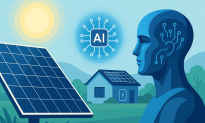
 Artificial Intelligence (AI) and Smart Technologies In Home Solar Systems
As solar energy becomes more accessible and affordable for single-family homes, homeowners are looking for ways to maximize their return on investment. Enter AI (Artificial Intelligence) and smart technologies — powerful tools that are transforming how solar systems are managed, optimized, and integrated into modern homes.
In this article, we’ll explore how AI improves solar performance, provide real-world smart tech solutions, and walk through implementation steps to help you future-proof your energy setup.
How AI Enhances Home Solar Systems
AI doesn’t just make your solar system “smart” — it makes it intelligent. Here’s how:
1. Predictive Energy Management
AI uses historical data and weather forecasts to predict solar energy production and adjust energy usage accordingly.
Example: If a cloudy day is coming, the AI can prioritize storing extra energy the day before, or reduce EV charging during low-generation hours.
2. Smart Load Balancing
AI systems can automatically shift high-energy tasks (like running a dishwasher or HVAC) to times when solar production is at its peak.
Result: You use more of your own solar power, rather than pulling from the grid — saving you money.
3. AI-Driven Battery Optimization
AI algorithms manage charging and discharging cycles of home batteries (like Tesla Powerwall or Enphase) to:
- Maximize lifespan
- Reduce grid dependency
- Ensure backup during peak rates or outages
Real-World Smart Technologies for Home Solar Systems
1. Smart Solar Inverters
Modern inverters (like those from SolarEdge or Enphase) come with embedded AI to:
- Monitor system performance
- Detect issues before they escalate
- Optimize panel-by-panel output in real time
Implementation: These are usually installed by your solar contractor and managed via mobile apps.
2. AI-Integrated Energy Management Systems (EMS)
Platforms like Span, Emporia, or Sense track all power usage in your home and integrate with your solar system.
Benefits:
- Track where every watt goes
- Schedule usage of heavy appliances
- Set preferences for load shedding during outages
How to implement: Requires installing a smart panel or clamp sensors on your electrical panel. Most are DIY-friendly or require an electrician.
3. Smart EV Chargers with Solar Sync
Devices like Wallbox Pulsar Plus or SolarEdge Home EV Charger can sync with your solar system.
What They Do:
- Charge your EV only when excess solar is available
- Pause charging if solar output drops
- Optimize charge rates based on utility time-of-use pricing
Installation: A Level 2 EV charger wired into your system with solar integration enabled.
4. Home Assistants & Smart Thermostats
Pairing AI solar systems with devices like:
- Google Nest or Ecobee thermostats
- Amazon Alexa or Google Home
…enables voice control, automated temperature adjustments, and seasonal energy optimization tied to solar production forecasts.
How to Implement AI in Your Home Solar System (Step-by-Step)
Step 1: Install a Smart Solar Inverter
Choose an inverter brand that offers advanced monitoring and smart optimization features (e.g., SolarEdge, Enphase).
Step 2: Add an AI-Driven Battery System
Install a battery like Tesla Powerwall, LG Chem, or Enphase IQ Battery and activate its AI energy automation settings.
Step 3: Install an Energy Monitoring System
Use devices like Sense, Span, or Emporia to track usage patterns and automate appliance scheduling.
Step 4: Connect Smart Devices
Integrate thermostats, EV chargers, and other smart appliances into a central hub or app that supports automation rules.
Step 5: Activate Forecast-Based Automations
Link your system to weather data (often included in solar apps) and enable features like “charge ahead of storms” or “pause EV charging during low production.”
Summary Table of Smart Tech Solutions
|
Technology |
What It Does |
Top Brands |
|
Smart Inverter |
Optimize panel output, detect issues |
SolarEdge, Enphase |
|
Energy Monitor (EMS) |
Track usage, automate load balancing |
Sense, Emporia, Span |
|
Smart EV Charger |
Sync EV charging with solar output |
Wallbox, SolarEdge |
|
AI Battery Controller |
Manage storage intelligently |
Tesla Powerwall, Enphase |
|
Smart Thermostat |
Automate climate control based on solar usage |
Nest, Ecobee |
AI and smart technologies are no longer optional — they are the next evolution of solar for single-family homes. From predictive charging to intelligent energy management, these tools unlock new levels of efficiency, savings, and resilience.
By adopting these systems today, you’re not just installing solar — you’re building a smarter, cleaner, and more independent future.